

Reflecting on a project rooted in community, heritage and hope
By Malcolm Bourne
former Head of Property and Site Development Lead at trinity college
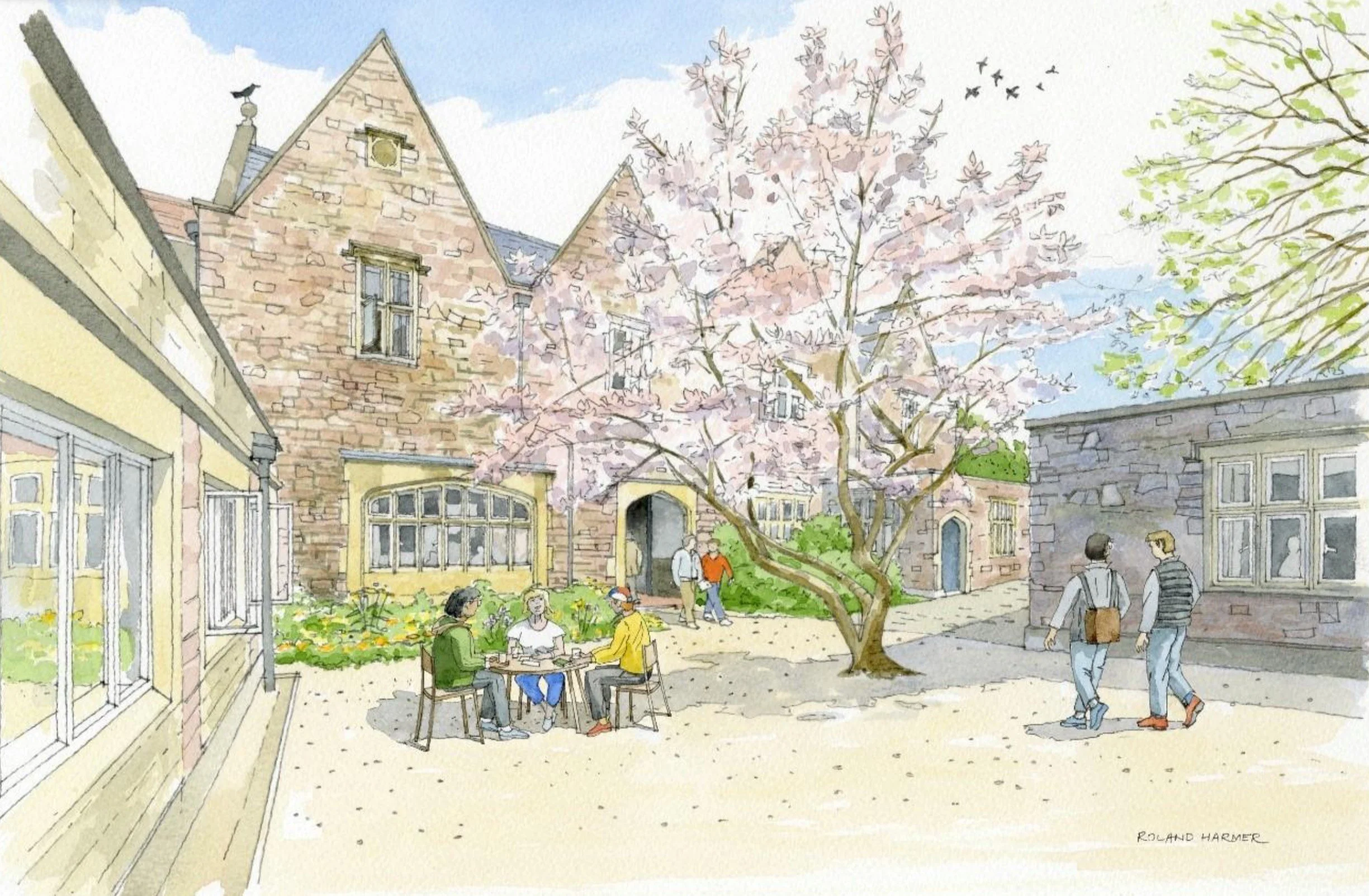
The completion of Phase One of the Trinity College Bristol (TCB) Student Village Masterplan marks more than just the culmination of five years of planning, consultation, and design. It signals a bold statement: that residential theological education, even amidst turbulent times, can be enhanced in sustainable design, community formation, and creative collaboration.
Situated on a spacious site within Bristol’s diverse urban landscape, TCB occupies a striking Grade II listed estate that has long served as a formative space for training church and community leaders. Yet the challenges were clear with outdated facilities, access limitations, and the need to adapt to a shifting educational market.
In my role as Site Development and Sustainability Lead, it became evident early on that physical transformation alone would not be enough. What was needed was a whole-campus vision—one that married architectural ambition with deep theological and community purpose.
At the heart of our purpose and process was people.
Although community can emerge despite the buildings they reside in, we knew that all truly healthy communities need to be intentionally fostered and when facilitated by inclusive design, they can thrive. To ensure this, we formed a diverse Site Development Group (SDG). This multi-stakeholder team of students, trustees, senior leaders, and external professionals became the project's visionary compass. Thanks to the projects exposure through the Housing Festival, the competition was publicised by the Architects Journal and as a result attracted almost 40 submissions, including several from international designers. Drawing inspiration from James Surowiecki’s book, The Wisdom of Crowds and supported by rigorous consultation tools, the SDG interviewed and selected the lead architects through the competitions two stage process. Every stage, from scoring frameworks to interviews, was marked by transparency, collaboration, and shared values.
A key strategic decision was to partner with Housing Festival, collaborating with its national initiative exploring Modern Methods of Construction (MMC) in response to the UK housing crisis. This partnership not only promoted our project but connected TCB to wider church and civic networks. As theological colleges across the UK faced declining enrolments post-COVID, this outward-facing posture not only encouraged us to remain resilient but also provided affirmation for our relevance.
Not every step was smooth. We were experiencing a sudden downturn in student numbers and funding. This combined with early pushback from Historic England on our proposed first phase prompted a re-evaluation of our project phasing. Rather than trying to push forward contentiously we recalibrated, opting to renovate existing built areas of the campus. That compromise proved vital as it kept the project grounded in its values while allowing the masterplan to move forward with integrity.
TCB was delighted to finish Phase One of its new student accommodation on time and on budget! This is a great testimony to the detailed design process and the excellent team of stakeholders and consultants that moved the project forward at every stage. As with any building project, the lessons are many but most significantly for me it highlighted that if design competitions and projects like this are done well, they can be vehicles for hope and community empowerment. It also proves that heritage need not be a barrier to innovation and investment in community, rather it can encourage it. Whether through how our facilities are built, stakeholder engagement, or visionary partnerships, these are the human elements that will always outlast bricks and mortar.
Phase One may be complete, but the project’s somewhat hidden legacy lies in both the people focused approach and a collaborative design competition framework that’s already been replicated by others. TCB is hugely appreciative of our team of excellent professionals, notable the Housing Festival, HDP Associates Limited, O’Leary Goss Architects Ltd and Kitto Group PLC whose energy and dedication for the project was critical. Moving forward, the hope is that TCB’s site development and its creative use of facilities can model and help redefine how theological institutions can use their land, making a case for sustainable/community-first development in an uncertain time.
In a sector often slow to adapt, Trinity College Bristol has offered a hopeful blueprint, one that doesn’t just house future church and community leaders but models how strategic collaboration can help shape the very future they will inhabit.